Have you ever wondered when the very first photograph was taken? The history of photography is a fascinating blend of creativity and scientific discovery that dates back to the early nineteenth century. Through a series of innovative experiments and remarkable breakthroughs, pioneers were finally able to capture the world’s first permanent image.
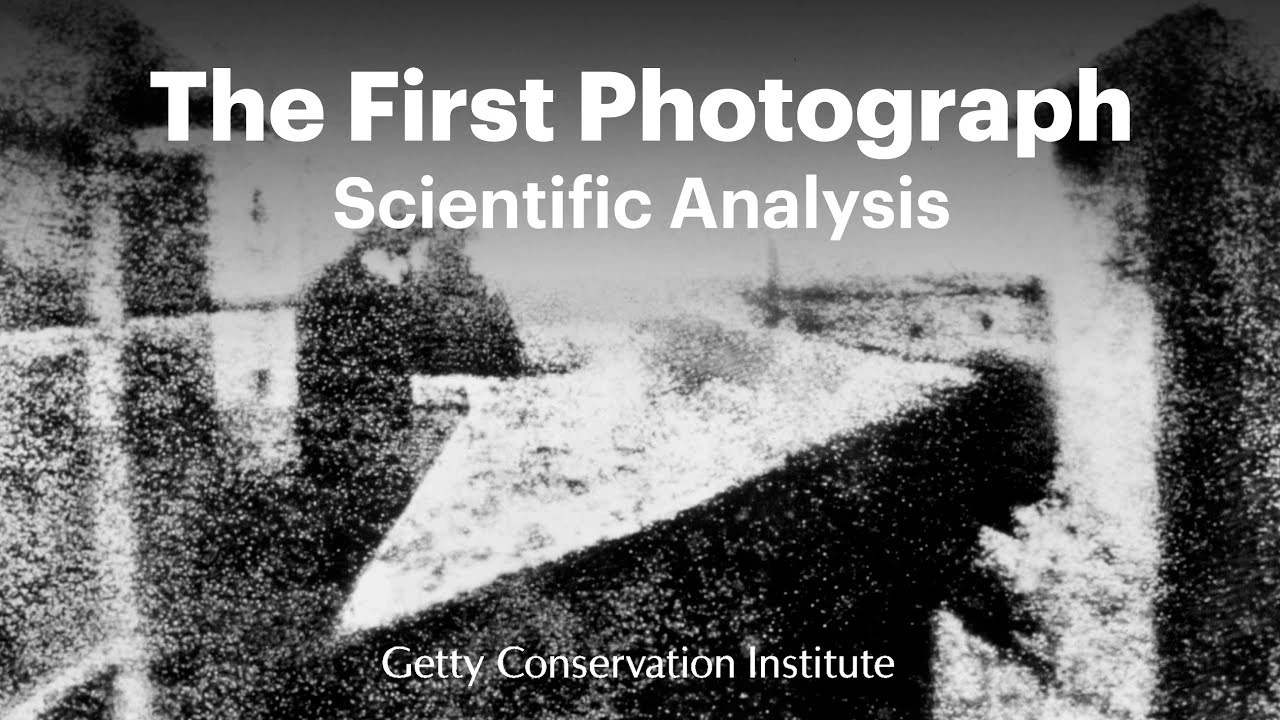
In this blog, we will take you on a journey through the origins of photography, highlight the key figures who shaped its development, and explore the technology that made the first photograph possible. Together, let’s uncover the remarkable story behind how photography began and how it forever transformed the way we view and document the world around us.
Early Beginnings of Photography
The story of photography began long before the first successful photograph was ever captured, as early thinkers, scientists, and inventors spent years exploring how light interacts with surfaces and how images could be preserved permanently. Through careful observation, experimentation, and gradual technological progress, they established the scientific and artistic foundation that would eventually transform photography into a revolutionary medium for both visual expression and documentation.
The Camera Obscura
The concept of the camera obscura dates back to ancient times and represents one of the earliest steps toward the invention of photography. It is a simple optical device that projects an image of the outside world onto a flat surface, demonstrating how light travels and forms pictures. The term “camera obscura” comes from Latin and means “dark chamber,” which accurately describes the device as a darkened room or box with a small opening on one side.
When light passes through this tiny hole, it projects an inverted image of the external scene onto the opposite wall or surface inside the chamber. This fascinating phenomenon helped early scientists and artists understand the behavior of light and perspective long before modern cameras existed. Renowned artists such as Leonardo da Vinci studied and used the camera obscura as a drawing aid, allowing them to trace scenes with improved accuracy and realism. Because of its importance in advancing the study of optics and visual representation, the camera obscura is widely regarded as a foundational development in the long journey toward modern photography.
The Quest for Permanent Images
Although the camera obscura was capable of projecting remarkably accurate images, it lacked the ability to preserve those visuals permanently, which became the central challenge for early innovators. The serious pursuit of creating lasting photographs gained momentum during the eighteenth and early nineteenth centuries, when inventors and scientists began experimenting extensively with light-sensitive materials in hopes of fixing projected images onto physical surfaces. Their goal was to transform fleeting projections into stable visual records that could be stored, studied, and shared.
Among the earliest and most important experiments were those involving chemical compounds such as silver nitrate, a substance known to darken when exposed to light. Researchers coated paper, metal, and other surfaces with these light-reactive chemicals to observe how images might be captured and retained. Although many early attempts produced only partial or temporary results, these investigations were essential stepping stones that gradually revealed how light could be harnessed to create permanent photographs. Each experiment contributed valuable knowledge about exposure, chemical reactions, and image stability, bringing the scientific community closer to a workable photographic process.
Joseph Nicéphore Niépce
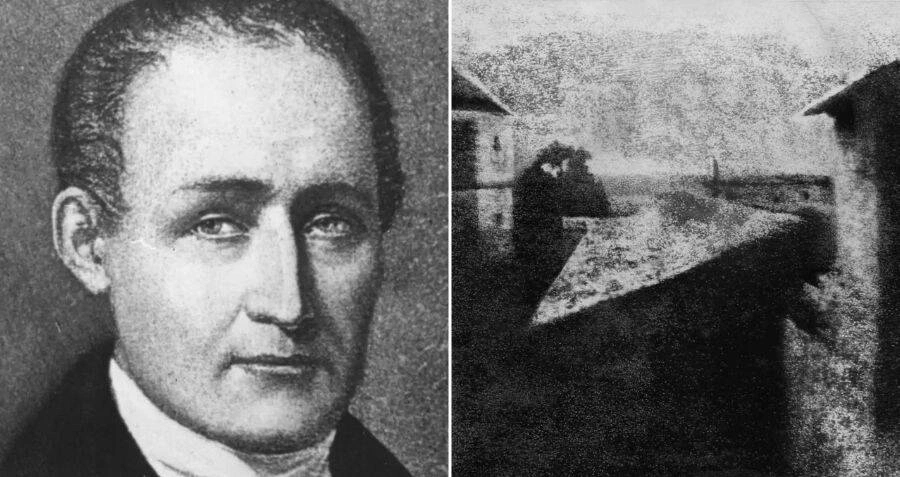
The world widely recognizes French inventor Joseph Nicéphore Niépce as the creator of the first permanent photograph, a breakthrough that marked the true beginning of practical photography. His fascination with capturing images started in the early nineteenth century, when he began experimenting with different methods to preserve the projections produced by the camera obscura. After many years of careful testing and refinement, Niépce successfully developed a technique he called “heliography,” which translates to “sun drawing,” a name that reflected the process of using sunlight to create images.
Around 1826 or 1827, Niépce achieved a historic milestone by capturing what is now known as the first permanent photograph, titled “View from the Window at Le Gras.” The image was taken from an upstairs window of his home in France and required an extremely long exposure time of approximately eight hours, demonstrating both the limitations and the remarkable achievement of early photographic technology.
To create this image, Niépce used a polished pewter plate coated with bitumen of Judea, a naturally occurring light-sensitive substance that hardens when exposed to light. During the exposure process, the areas of the coating that received more sunlight became hardened, while the softer, unexposed portions remained soluble and were later washed away with a solvent. This method left behind a fixed, permanent image etched onto the plate, representing a groundbreaking moment in the history of visual documentation. Niépce’s innovation laid the essential foundation for future photographic advancements and opened the door for the rapid evolution of photography in the decades that followed.
Louis Daguerre
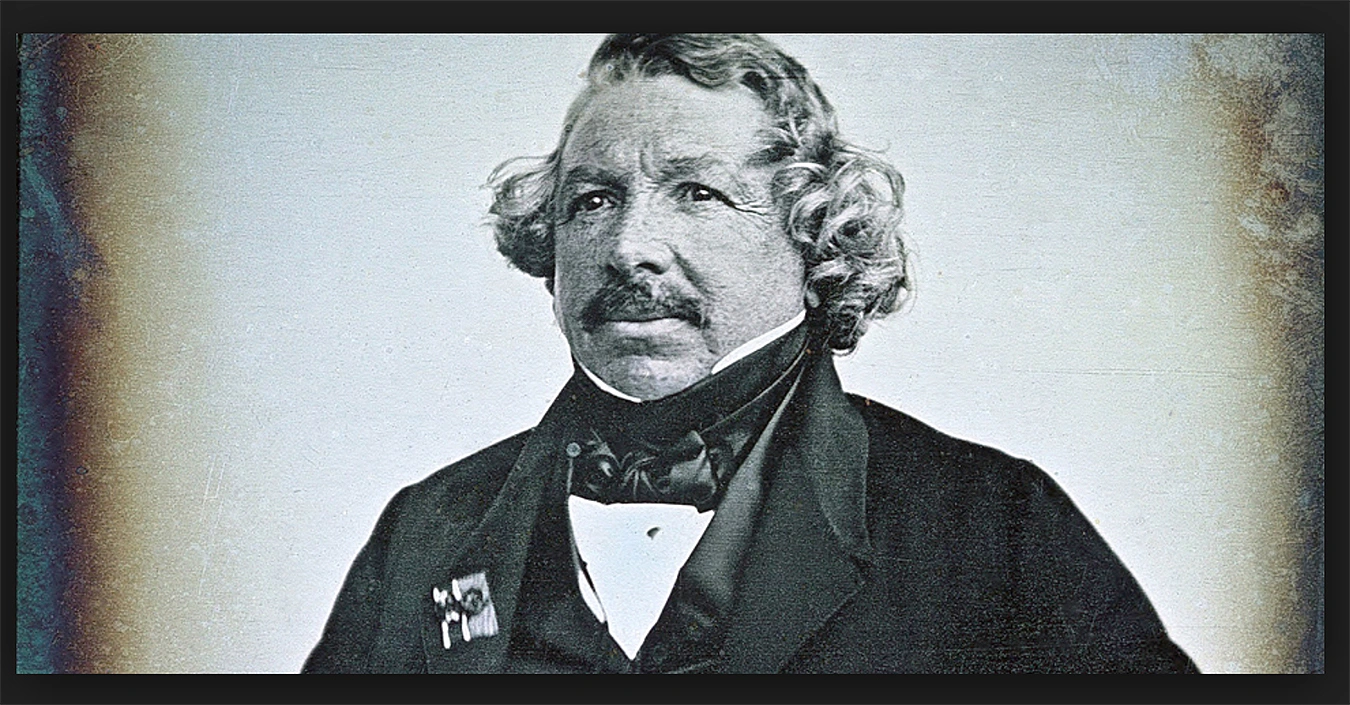
Louis Daguerre, a gifted French artist and inventor, became deeply interested in the photographic experiments of Joseph Nicéphore Niépce and began collaborating with him during the 1820s to improve the process of capturing permanent images. Their partnership combined Niépce’s scientific groundwork with Daguerre’s artistic vision and technical curiosity, creating momentum that would significantly advance early photographic methods. After Niépce’s death in 1833, Daguerre continued their shared research with determination and eventually achieved major breakthroughs that transformed photography into a more practical and accessible medium.
In 1839, Daguerre officially introduced the Daguerreotype process, a revolutionary development that dramatically reduced exposure times while producing images with far greater clarity and detail than earlier methods. The daguerreotype technique involved exposing a highly polished copper plate coated with light-sensitive silver iodide to light inside a camera and then developing the latent image using carefully controlled mercury vapor. This process produced a sharp, highly detailed positive image on a reflective surface, marking a significant milestone in photographic history. Daguerre’s innovation made photography more commercially viable and widely adopted, paving the way for the rapid growth of photographic technology and its eventual transformation into the modern medium we know today.
Introducing the First Photograph
The subject of the first photograph ever taken by Joseph Nicéphore Niépce carries enormous historical importance because it represents the moment when humanity first succeeded in permanently capturing a real-world scene through photographic means. This groundbreaking image is titled “View from the Window at Le Gras,” and it offers a rare and fascinating glimpse into life in early nineteenth-century France while marking the true birth of practical photography.
Niépce captured this remarkable photograph from an upstairs window of his estate in Saint-Loup-de-Varennes in the Burgundy region, carefully choosing a stable outdoor scene that would remain relatively unchanged during the extremely long exposure required by his experimental process. The image reveals a quiet courtyard surrounded by several rustic buildings, including a barn and a dovecote, all illuminated by natural sunlight that gives the composition a soft yet distinctive character. Because the exposure time lasted approximately eight hours, the movement of the sun across the sky caused both sides of the buildings to appear lit, producing a unique visual effect that unintentionally documents the passage of time within a single frame.
“The View from the Window at Le Gras” stands out not only for its historical significance but also for its thoughtful composition and impressive technical achievement, especially considering the limitations of early nineteenth-century science and materials. Niépce deliberately selected this particular view because he needed a subject that would remain still for many hours, allowing the light-sensitive surface enough time to record the scene successfully. This first permanent photograph marked the beginning of an entirely new era in visual documentation by proving that real-world imagery could be chemically captured and preserved for the future. Even today, the image remains one of the most iconic milestones in the history of photography and continues to inspire photographers, historians, and visual artists around the world.
The Technical Process Behind the First Photo
The creation of the first permanent photograph was the result of years of careful experimentation, persistence, and scientific curiosity by Joseph Nicéphore Niépce, whose heliography process, meaning “sun drawing,” introduced a completely new method for recording visual information. This innovative technique involved a sequence of precise steps designed to harness the chemical reaction between light and specially prepared materials in order to produce a lasting image.
Materials and Preparation
Niépce began the heliography process by selecting a highly polished pewter plate, which served as the smooth and reflective base required for image formation. He then coated the surface with bitumen of Judea, a naturally occurring form of asphalt known for its light-sensitive properties, because this substance hardens when exposed to sufficient light energy. To enhance the material’s responsiveness and create a workable coating, Niépce dissolved the bitumen in lavender oil, producing a thin varnish that could be evenly applied across the metal plate.
Once the prepared mixture was carefully spread and dried, the plate became ready for exposure inside a camera obscura, where light from the outdoor scene would gradually react with the bitumen coating. This meticulous preparation stage was essential because the uniformity, thickness, and sensitivity of the coating directly influenced the clarity and permanence of the final image. Niépce’s methodical approach to materials and preparation demonstrated an advanced understanding of both chemistry and optics, laying the groundwork for future photographic innovations that would dramatically shorten exposure times and improve image quality in the decades that followed.
Public Reaction and Adoption
When Louis Daguerre introduced the Daguerreotype in 1839, the world responded with a mixture of amazement, curiosity, and cautious skepticism. For many people, the idea that light could permanently capture reality felt almost magical.
Immediate Public Fascination
The announcement, made in partnership with the French Academy of Sciences, created enormous excitement. Crowds gathered to witness demonstrations, and newspapers across Europe praised the invention as a scientific miracle. Portrait studios quickly began opening in major cities because the daguerreotype dramatically reduced exposure times compared to earlier methods.
Skepticism and Limitations
Despite the enthusiasm, some critics questioned the practicality of the new technology. Early daguerreotypes were:
- Expensive to produce
- Delicate and easily damaged
- Unable to be duplicated (each image was unique)
- Dependent on toxic mercury vapor during development
Artists also worried that photography might threaten traditional painting and portraiture.
Rapid Adoption and Global Spread
Even with limitations, adoption was swift. By the early 1840s:
- Portrait studios spread across France, United States, and United Kingdom
- Middle-class families could finally afford personal portraits
- Scientists and explorers began using photography for documentation
The daguerreotype became the first commercially successful photographic process, transforming photography from an experimental curiosity into a practical medium.
Lasting Impact
The public’s enthusiastic response proved that photography had a powerful future. Daguerre’s innovation built directly on the earlier work of Joseph Nicéphore Niépce, helping launch photography into mainstream use. Within a few decades, improved processes would make photography faster, safer, and accessible to the masses.
Initial Public Reaction
The French Academy of Sciences in Paris made a thrilling announcement about the Daguerreotype process. It amazed people with its remarkable ability to capture clear images of real-life scenes in great detail. Newspapers and journals widely praised the invention, helping it spread rapidly across Europe and America.
Scientific and Artistic Communities
The scientific community quickly recognized photography’s enormous potential. Researchers believed photographs could document experiments, record observations, and advance many fields of study.
Artists, however, were divided.
- Some feared photography might challenge traditional art forms like painting and drawing.
- Others welcomed it as a powerful new creative tool.
Pioneering photographers such as Julia Margaret Cameron and Nadar later proved that photography could be both technically precise and artistically expressive.
Public Adoption
As awareness grew, demand for daguerreotypes skyrocketed. Portrait studios began appearing in major cities, offering faster and more affordable likenesses than painted portraits.
For the first time in history:
- Middle-class families could afford personal portraits
- Photography became accessible beyond the wealthy elite
- Portrait photography turned into a booming business
This marked a major shift in visual culture.
Global Spread
The popularity of the daguerreotype quickly moved beyond France. Enthusiasts and entrepreneurs in the United Kingdom and the United States eagerly adopted the technology.
- First U.S. photo studios opened in the early 1840s
- By the late 1840s, photography was widespread
- The process became the first commercially successful photographic method
Impact on Society
Photography’s ability to freeze real moments profoundly changed society. It transformed how people documented their lives and history.
Photographs became:
- Cherished keepsakes
- Family heirlooms
- Valuable historical records
The early public enthusiasm paved the way for rapid innovation and the advanced photographic techniques we enjoy today.
Cultural and Artistic Influence
The rise of photography reshaped art, culture, and society in powerful ways.
Revolutionizing Visual Documentation
Before photography, visual records depended on paintings, drawings, and written descriptions. Photography introduced unmatched accuracy and objectivity.
This revolutionized:
- Journalism
- Scientific research
- Historical documentation
Images could now serve as direct visual evidence.
Influence on Art and Artists
Photography pushed traditional artists to rethink their approach. While some worried about competition, many painters began experimenting with light, composition, and fleeting moments.
This influence helped inspire movements such as Impressionism, which emphasized capturing light and momentary effects.
Democratization of Portraiture
Before photography, painted portraits were a luxury for the wealthy. Photography changed that forever.
Now:
- Ordinary people could afford portraits
- Personal visual history expanded across social classes
- Family photo albums became common cultural artifacts
This was one of photography’s most profound social impacts.
Cultural Documentation and Ethnography
Photography became a vital tool for documenting cultures and historical events.
Notable figures include:
- Edward Curtis, who documented Native American tribes
- Mathew Brady, who photographed the American Civil War
Their work provides invaluable historical insight still studied today.
Impact on Memory and Identity
Photographs quickly became central to personal and collective memory. Family albums allowed people to preserve life milestones and pass visual histories across generations.
Photography fundamentally changed how humans remember the past.
Photography as an Art Form
Over time, photography gained recognition as a legitimate fine art.
Masters such as:
- Ansel Adams
- Dorothea Lange
- Henri Cartier-Bresson
elevated photography through powerful composition, storytelling, and emotional depth. Galleries, museums, and collectors began preserving important photographic works.
Preservation and Historical Significance
Preserving early photographs is essential to understanding the evolution of photography and its cultural impact.
Early Preservation Efforts
From the beginning, photographers recognized that early processes like heliographs and daguerreotypes were fragile. Careful storage and handling became necessary to prevent damage from:
- Light
- Humidity
- Physical contact
Conservation Techniques
Modern conservation methods now protect early photographs through:
- Climate-controlled storage
- Archival enclosures
- High-resolution digitization
Museums, libraries, and archives worldwide safeguard these historic images for future generations.
Historical Significance
Early photographs provide an irreplaceable window into the past. For example, Civil War images by Mathew Brady and his team vividly document the realities of the conflict in ways written records alone cannot.
Cultural Heritage
Photographs preserve both major historical events and everyday life. By protecting these images, we maintain a living connection to our shared human story.
Educational and Research Value
Historians, scholars, and researchers rely heavily on preserved photographs to study:
- Social change
- Cultural traditions
- Technological progress
These visual records enrich and sometimes challenge written history.
Public Engagement and Accessibility
Today, institutions actively share historic photographs through:
- Museum exhibitions
- Books and publications
- Online digital archives
Digital technology has dramatically expanded public access to early photography.
When Was the First Picture Taken — Final Thoughts
The journey of photography is a powerful story of human curiosity and innovation. The groundbreaking work of Joseph Nicéphore Niépce marked the beginning of a new visual era, later advanced by Louis Daguerre and many others.
From the first heliograph to today’s digital images, every photograph contributes to our shared visual history. As technology continues to evolve, honoring these early milestones helps us appreciate just how far photography has come.
FAQ: When Was the First Picture Taken | A Brief History
1. Who took the first photograph in history?
The first permanent photograph was taken by Joseph Nicéphore Niépce in 1826 or 1827. He used a process called heliography to capture an image titled “View from the Window at Le Gras” on a pewter plate coated with light-sensitive bitumen.
2. What is the first photograph ever taken?
The first photograph ever taken is “View from the Window at Le Gras” by Niépce. It shows the courtyard and buildings outside his estate in Saint-Loup-de-Varennes, Burgundy, France, illuminated by sunlight during a long exposure of around eight hours.
3. When was photography invented?
Photography was invented in the early 19th century, with Joseph Nicéphore Niépce creating the first permanent image in the 1820s. The medium evolved rapidly after Louis Daguerre introduced the daguerreotype in 1839, making photography more practical and commercially viable.
4. What process did Niépce use to take the first photo?
Niépce used a technique called heliography, meaning “sun drawing.” He coated a polished pewter plate with bitumen of Judea, a light-sensitive substance, and exposed it in a camera obscura. Sunlight hardened the bitumen, while unexposed areas were washed away, leaving a permanent image.
5. How long did it take to capture the first photograph?
The first photograph required an extremely long exposure time of about eight hours. Niépce had to choose a stable outdoor scene that would not change during this period, which is why he photographed the view from his estate window.
6. Who improved photography after Niépce?
After Niépce’s death in 1833, Louis Daguerre continued their work and introduced the daguerreotype process in 1839. This method reduced exposure times, produced clearer images, and made photography more accessible to the public.
7. What was the public reaction to the first photographs?
When Daguerre introduced the daguerreotype, the public was amazed and curious, while some were skeptical. Scientists saw its potential for documentation, while artists debated its impact on traditional art. Photography quickly gained popularity and spread across Europe and America.
8. How did photography change society?
Photography revolutionized the way people documented their lives and history. It made portraiture accessible to all social classes, helped preserve memories, and became an essential tool for journalism, science, and historical documentation. Early photographs also influenced art and inspired movements like Impressionism.
9. Why is preserving early photographs important?
Preserving early photographs is vital because they are historical and cultural treasures. They provide insights into past societies, traditions, and significant events. Museums and archives use specialized conservation techniques to protect these images for future generations.
10. When can we say photography became widely popular?
Photography became widely popular in the 1840s, after the daguerreotype process spread to England, the United States, and beyond. Photo studios opened in major cities, allowing ordinary people—not just the wealthy—to capture personal portraits and document their lives.
11. Are there photos before Niépce’s heliograph?
Before Niépce, devices like the camera obscura could project images, but no permanent images existed. Niépce’s heliograph was the first method to chemically capture a scene that could be preserved indefinitely.
12. How did photography influence art and culture?
Photography influenced both art and culture by introducing new ways to see, document, and interpret the world. Artists adapted to the medium, and photography itself became recognized as a legitimate art form. It also enabled the creation of historical records and personal archives that shaped cultural memory.